
Traceless campfires around Tromsø

Updated: 1 day ago
Since 2024, the Traceless Northern Lights Tourism project has been working to protect nature and local communities from the impacts of northern lights tourism around Tromsø.
As part of the project, aurora guides, visitors and local residents have mapped hundreds of campfires at popular northern lights viewing areas.
Volunteers also removed around 20 campfires on Kvaløya, and restored the burned soil and vegetation to test different restoration methods. They marked these spots with wooden tripods. If you see them, please let them be and give nature time to recover!

Volunteers posing with a tripod that marks a restored patch of burned vegetation on Kvaløya, in 2026.
Leave No Trace: ~ Take care of the tripods and give the tundra time to heal. ~ If you make a campfire, don't make it directly on the ground. ~ Don't use the wood you find in nature, even if it looks dead. ~ Bring back your ashes and coal.
Campfires: an old habit and a commercial practice
For many locals, making a campfire outdoors is an important part of friluftsliv*. And for many northern lights tour operators, campfires are a part of the experience they advertise. This worked relatively well until the number of people exploring nature around Tromsø grew dramatically from the 2010s onwards, especially visitors during the northern lights season.
Mass tourism has shaped Tromsø into what it is today, for better or worse. It brings jobs and economic growth, but also creates tensions within the community. Crowding, rising prices and the growing cost and limited availability of housing are some of the challenges. The increasing number of campfires adds to these tensions, fuelling conflict between locals and visitors.

A sign that is visible in a few places near Tromsø, often along routes that are popular for northern lights hunting.
Local engagement and regenerative tourism
The Norwegian institute for nature research (NINA) is leading the Traceless Northern Lights Tourism project, in collaboration with Rissa Citizen Science. Together, we welcomed locals and visitors to participate in citizen science and nature restoration activities.
More than 400 campfires have been mapped by aurora guides and their guests during northern lights tours within a three-hour drive of Tromsø in all directions. Thanks to their efforts, we now have a much better picture of where campfires are being made. It would be difficult for any funded research project to collect so much data across such a wide area!
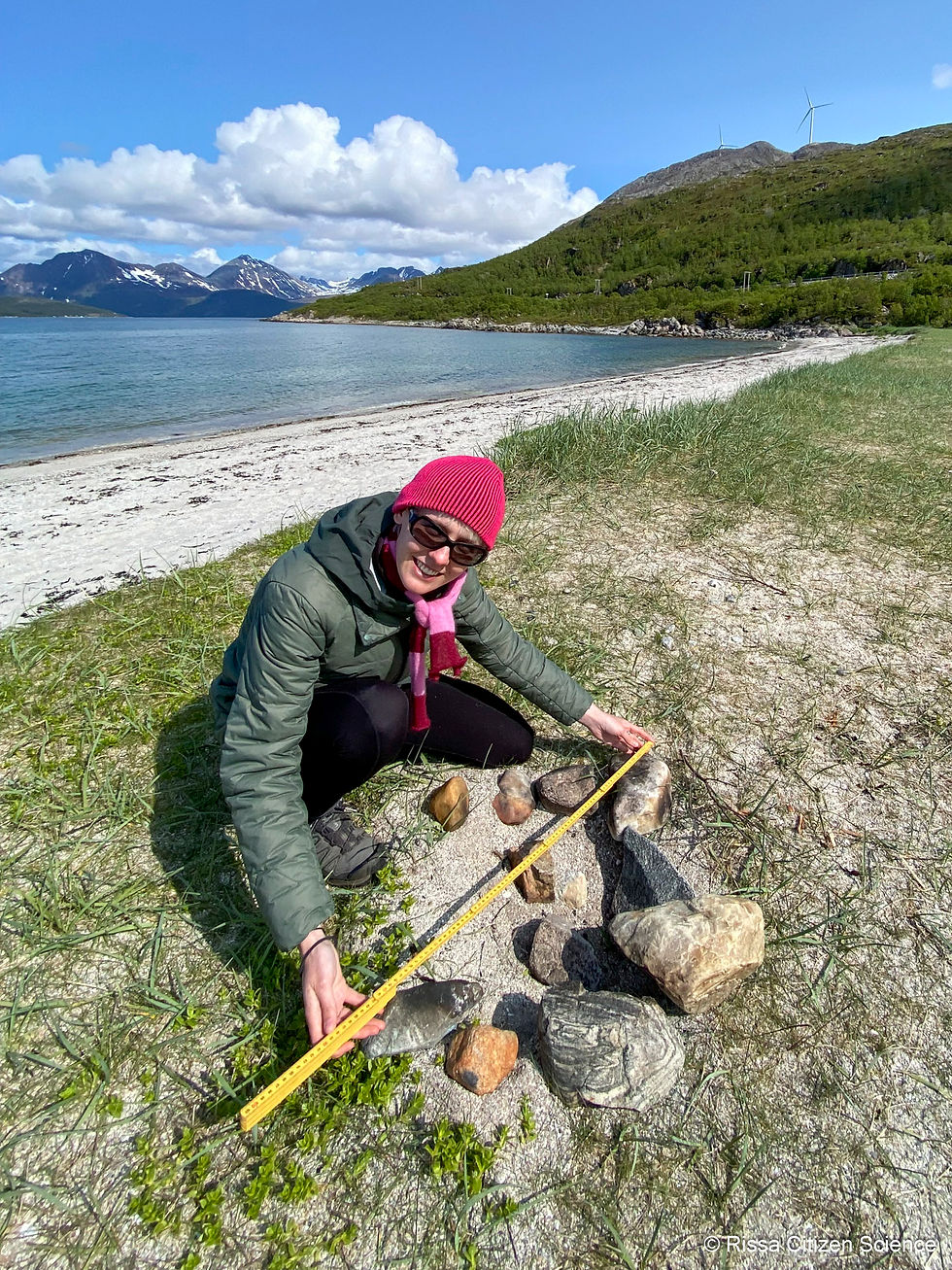
A volunteer is mapping a campfire and measuring its diameter.
Just as importantly, involving visitors in hands-on mapping helps raise awareness of the impact campfires can have on nature. We hope it also changes how people think about making fires directly on the ground, especially in the Arctic, where the growing season is short and vegetation can take a very long time to recover.

A tripod over a restored patch of burned tundra in Rekvikeidet, September 2026.
Wooden tripods in Grøtfjord, Rekvikeidet and Sørskaret
In 2025 and 2026, 72 volunteers took part in nine free events organized by Rissa Citizen Science to remove campfires and help restore burned soil and vegetation.
Locations of the campfires removed in Grøtfjord, Rekvikeidet and Sørskaret in 2025 and 2026.
The work focused on three popular northern lights viewing spots where campfires are especially common. Trees and bushes in these areas also show signs of damage, including cuts, burns and other forms of mutilations.

A volunteer is documenting a firepit filled with trees taken from the surrounding environment in Grøtfjord.
Following methods designed by the researchers at NINA, the volunteers gave nature the chance to recover, starting with removing litter, rock rings, burned logs, coal and ashes.

Volunteers remove litter, coal and ashes as part of the restoration process.
After cleaning up the campfire, the volunteers often used turf from the surrounding area to cover the bare soil and speed up the recolonization of the burned substrate by the native vegetation.

A volunteer holds a piece of turf ready to be used in a firepit, to speed up the revegetation process.
Eventually, we built wooden tripods from willow branches and placed them over the restored areas. The tripods serve two purposes: they help protect the spots from being burned again, and they carry a sign that invites visitors to avoid making campfires directly on the ground.

Two volunteers set up a tripod over a restored patch of tundra in Grøtfjord.
Take care of the tripods
If you spot a tripod lying on the ground, feel free to stand it back up! Take a moment to read the sign and share the story with your partner, friends, guide or fellow travellers. Spreading awareness may not change everything overnight, but it’s an important first step towards treating nature with more care and respect.

If you care about nature, take care of these tripods!
A 1-minute video series about regenerative tourism
Watch this video series by Roel Melman, and learn what we mean by "regenerative tourism".
Video 1: with Marit, 1 minute
Video 3: with Maren, 1 minute.
We intend to be as inclusive as possible with the Traceless Northern Lights Tourism project. From the start, we welcomed the registered tour operators to join the intiative, and local stakeholders.
We set up a reference group that includes Brensholmen & Sommarøy utviklingslag, Forum for Natur og Friluftsliv (FNF), Grøtfjord bygdelag, Grøtfjord utviklingslag, Hold Norge Rent, Leave No Trace, Sabima, Tromvik utmarkslag, Tromsø Guide Forening (TGF) Tromsø kommune, Visit Tromsø. In 2026, Best Arctic and Tromsø Activities Hotel helped recruit volunteers to remove campfires and restore the burned soil and vegetation.
This project was funded by the Regional research fund Nord-Norge.
The project is described on NINA's website.
* Friluftsliv (pronounced free-loofts-live) translates literally to "open-air living" or "free-air life" in Norwegian. It is a cultural philosophy and lifestyle centered on spending time outdoors in nature for physical, mental, and spiritual well-being, regardless of the weather (as defined by Visit Norway)


Comments